Domestic couples for a main residence, a second home or an estate
Three kinds of couple, depending on how the family uses the property
Maids & Co specialises in selecting domestic couples for main residences, second homes and estates throughout Spain and Europe.
Placement agency licensed by the SNE, no. 1300000318
First vetted couples in under 3 hours, references checked
One-off fee only when you hire · 6-month guarantee
THE THREE KINDS OF COUPLE
Three kinds of domestic couple
All three are live-in couples, but they do not all need the same experience: what matters is not only the size of the property but how the family uses it, which sets the pace of work and the autonomy required.
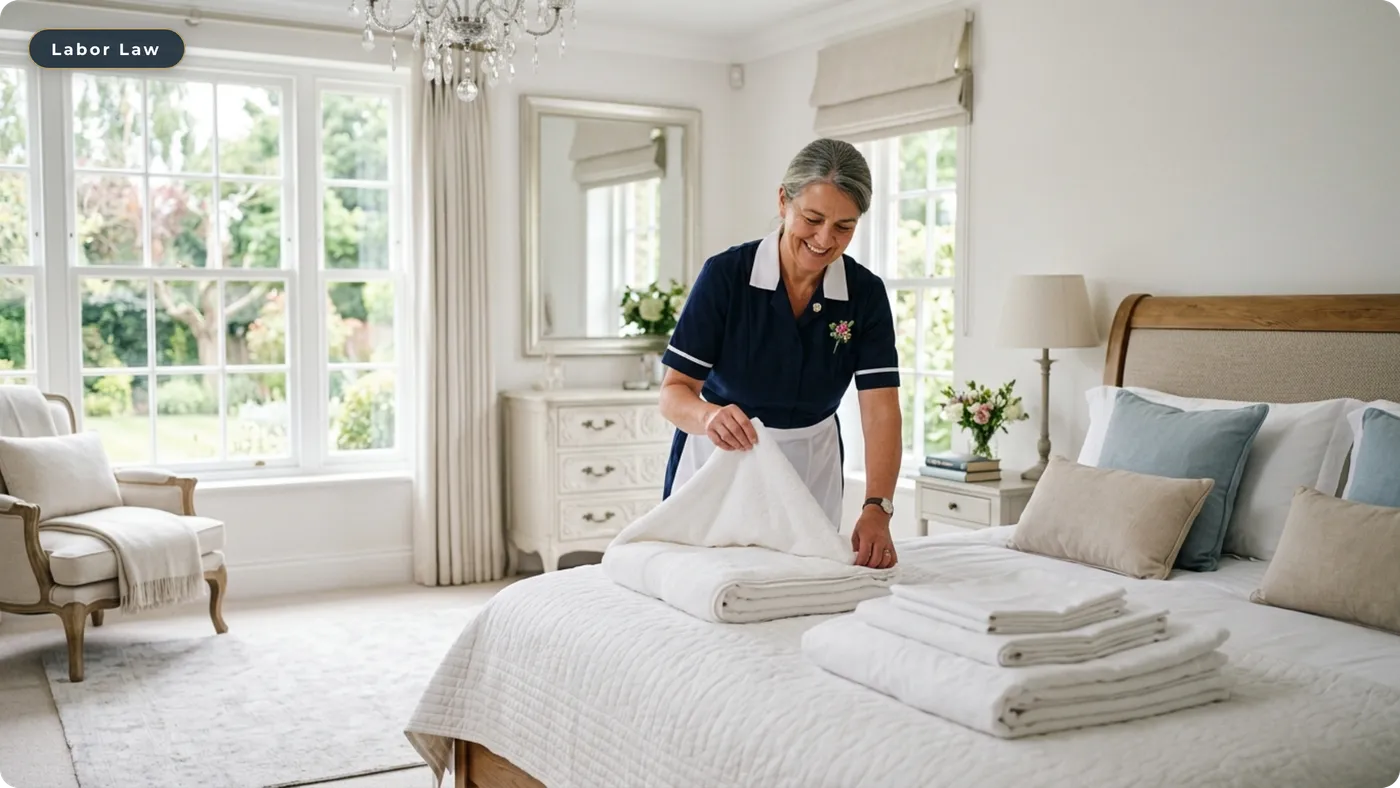
Live-in couple for a main residence
This is the couple who work in the home where the family lives its everyday life for much of the year, in the city, the country or by the sea.
The work follows the family's routines, is steady all year round and eases only while they are away. In some positions, one or both partners travel with the family.
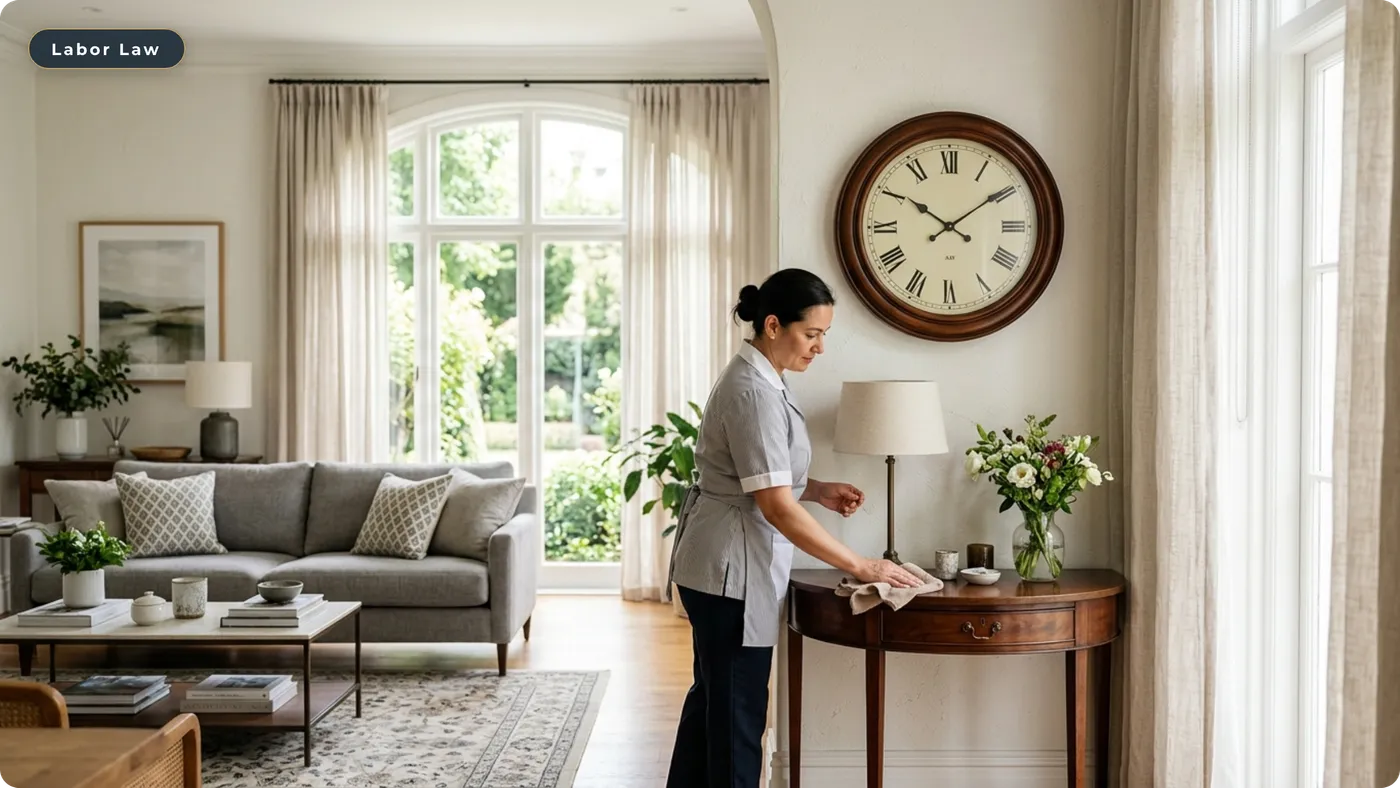
This is the couple for properties the family uses at weekends, on holiday or for particular seasons: country, seaside or mountain houses and ski chalets.
With the family in residence, the service is intense; when they leave, the work centres on supervising, maintaining and preparing for the next arrival. The couples sought combine demanding service during occupancy with autonomy and responsibility while the family is away.
This profile is for rural properties, kept for leisure or with farming, livestock or hunting activity, where the land and the animals play a much larger part. The estate often combines private use with a working business.
As well as the house, caretakers look after tracks, fencing, machinery and animals, often far from towns, so autonomy is especially important.
There is no single model of domestic couple: the combination depends on the property, the weight of indoor and outdoor work, whether there are other staff and the autonomy the position requires.
Interior service, cleaning and laundry
Cleaning and organising the house, laundry and ironing, preparing bedrooms, wardrobe changes and care of clothing and delicate surfaces.
Cooking and table service
Everyday family cooking, shopping and the larder, meals for guests and table service, working alongside any cook or chef.
Family support and help with children
Support with the family's daily routines and, where agreed, after-school snacks or accompanying the children, without necessarily replacing a specialised nanny.
Driving, vehicles and errands
Driving family members, runs to schools, airports or activities, shopping, errands, parcels and basic upkeep of the vehicles.
Garden, pool and grounds
Routine upkeep of gardens, terraces, pools and outdoor areas: irrigation, lawns, basic pruning, outdoor furniture and general supervision of these spaces.
Property maintenance
Heating, air conditioning, basic plumbing and electrics, small repairs and coordinating technicians and trades when specialist work is required.
Land, tracks and machinery
Tracks, access roads, fencing, irrigation, firewood and scrub clearing, and operating tractors, trailers, four-wheel drives, brushcutters, chainsaws or water pumps.
Animals and horses
Experience with horses, livestock, dogs or other animals: feeding, basic supervision, cleaning stables and spotting problems. Some positions may also require riding.
Hunting and sporting estates
Experience of driven hunts and beats: tracks, firebreaks, feeders, water points, fencing, kennels and guest logistics. A firearms licence is valued, but it neither replaces a gamekeeper nor authorises guarding the estate (Law 5/2014, art. 6.3).
Presence, security and coordination
Keyholding, access control, receiving suppliers and workmen, monitoring alarms and reporting issues while the family is away.
A different combination in every position
At Maids & Co we do not simply look for two good professionals separately, but for a couple whose joint experience fits the kind of property, the family's lifestyle and the real responsibilities of the position.
HOW A COUPLE IS EMPLOYED IN SPAIN
Two contracts, two registrations, pay in kind
There is no “couple contract”: there are two contracts, one per person, each with their own rights.
1
Two contracts and two registrations
Each partner signs a contract with the head of the household (payslip, two extra payments, 30 days' holiday, final settlement) and is registered under the Special System for Household Employees before starting.
Royal Decree 1620/2011 covers domestic tasks, caretaking, gardening and driving (art. 1.4). Working, at any frequency, for the employer's farming, livestock or hunting business presumes ordinary employment (art. 2.3), except marginal or occasional services.
A company employer (e.g. the one running the estate) means ordinary employment (art. 2.1.a); household employment needs an individual (art. 1.3). Check before signing.
2
Accommodation: up to 30% in kind
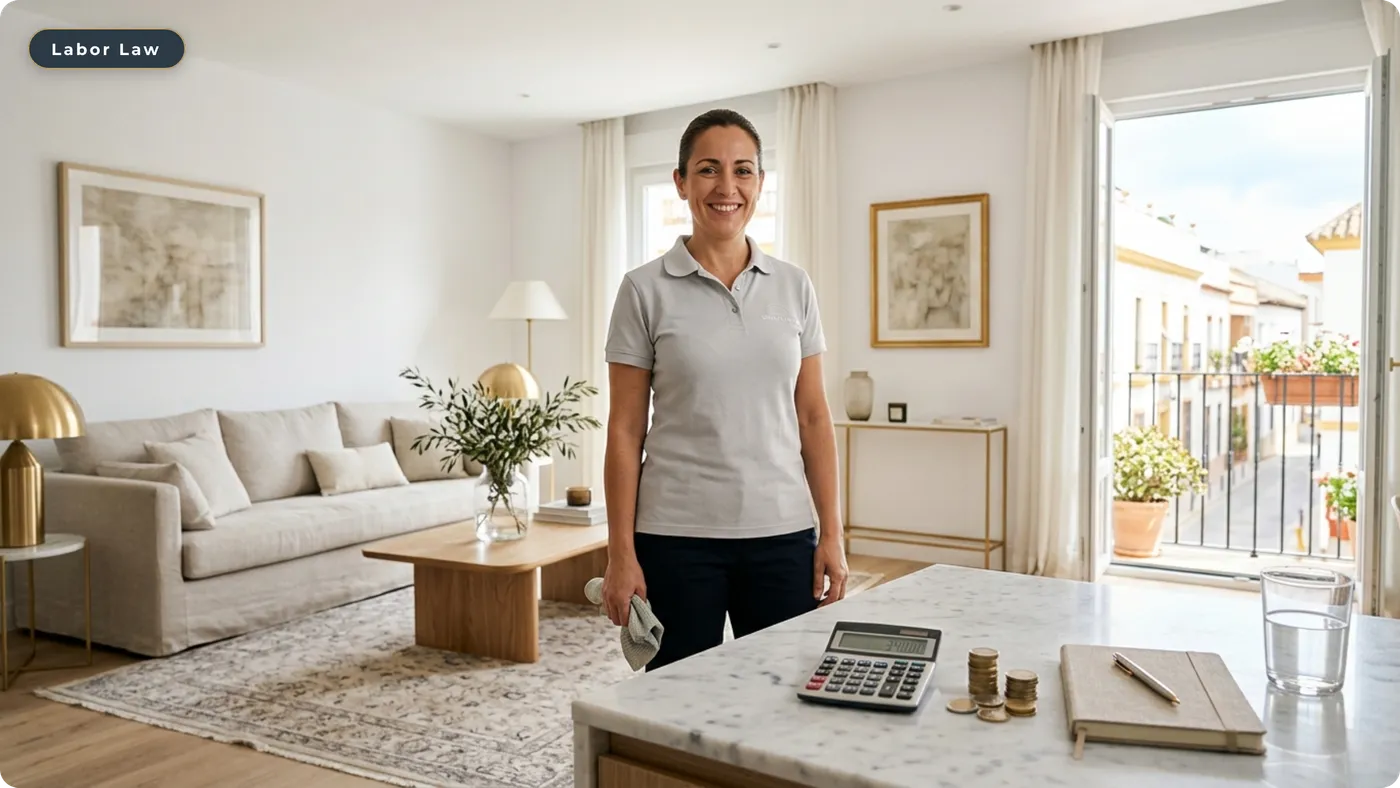
Accommodation and board may be deducted as salary in kind up to 30% of the total, and each partner must receive in cash at least the minimum wage (€1,424.50 over 12 payments in 2026; €1,221 a month over 14 payments, plus the two extra payments).
The accommodation is declared and contributions are paid on it. Its use is tied to the contract and ends with it.
Legal floor for the couple in 2026: €2,849 a month in cash (two SMI), plus accommodation and both employer contributions.
3
Hours, rest and days off for each partner
A maximum of 40 hours of effective work a week per person, 12 hours' rest between shifts (10 for live-in staff, making up the difference within four weeks) and 36 consecutive hours of weekly rest, which in a couple usually coincide.
Standby hours, available to the family without working, are agreed separately and paid or compensated. Where the house is used seasonally, the salary is agreed for twelve months and never falls below the minimum wage in any month; occupancy can be paid as a supplement.
The pay of a domestic couple depends on the kind of property, the number of people living there, the experience of both professionals and the duties and level of responsibility of each.
As a guide for Spain, the couple's combined pay usually falls between €3,000 and €6,000 gross a month, plus social security contributions and accommodation.
12 payments, in cash and excluding accommodation · by duties, kind of property and experience
Legal minimum in cash
€2,849/month
2 × 2026 SMI over 12 payments (€1,424.50 each); over 14 payments, €1,221 a month each plus the two extra payments
Employer's Social Security
≈ 22% of each salary
two registrations under the household employees system
Accommodation and board
separately or up to 30% in kind
never below the SMI in cash; utilities in writing
Maids & Co fee
1 month's salary + VAT
one-off, only on hiring · includes the 6-month guarantee
In other European countries, pay can be considerably higher and varies with the country, the local labour market, the cost of living, the demands of the position and the regulations where the work is done.
THE PROCESS
How we select a domestic couple
Two professionals who must fit both individually and in the way they work together, with a single point of contact.
1
Assessing the property
We define the kind of residence or estate, the duties of each partner and the terms of the position.
2
Selecting and presenting couples
We assess couples with compatible experience, check their track record and present those who fit best.
3
Interviews and assessment
We arrange the interviews and support the family throughout the assessment and decision.
4
Starting and formalising
We support the couple's start and the terms of each role, in line with the requirements of the country where they will work.
GETTING THE TYPE RIGHT
Which domestic couple does the property need?
The right domestic couple is defined by three criteria: how the family uses the house, what surrounds it and the level of service it requires.
Everyday life for much of the year → live-in couple for a main residence
Weekends, holidays or seasons → live-in couple for a second home
Land, animals, machinery or farming, livestock or hunting activity → caretaker couple
Frequent guests, peak occupancy seasons, driven hunts, tientas (the testing of young fighting cattle), celebrations or other staff → a higher level of service and possible additional help
We select all three kinds of domestic couple for properties throughout Spain and in other European countries.
Outside Spain we check the documents needed to work legally, the languages and the references; hiring complies with each country's regulations. Each process is adapted to the location and the family, and part of it can be done by video call.
A domestic couple who speak fluent English are particularly needed in international households, with staff, guests and suppliers of different nationalities.
It is valued that they understand instructions, communicate with the family and its guests and coordinate with other professionals, with English as their everyday working language. The level matches the duties of the position and, where necessary, experience with international families is required.
Two professionals who live on the property and jointly run it day to day, usually one indoors and the other outdoors. Each has their own contract and Social Security registration.
It depends on the position. Usually one looks after the interior and the other the outdoor work and maintenance, but some couples share the tasks equally or work within a larger team.
It depends on how the family uses it: if they live there for much of the year, a couple for a main residence is appropriate; if they use it seasonally, one for a second home; if there is land, animals or machinery, a caretaker couple.
As a guide for Spain, the couple's combined pay usually falls between €3,000 and €6,000 gross a month, plus contributions and accommodation. The legal minimum is €2,849 a month in cash for the two.
Pay can be considerably higher than in Spain and varies with the country, the local labour market, the cost of living and the demands of the position.
We assess them jointly: we check experience and references and look not only at each partner but at how they work together, how they share responsibilities and which properties they know.
They are recruited in every part of Spain and in other European countries, for all three kinds of couple. Where the location requires it, part of the process is done by video call, with in-person stages before the couple start.
Yes. We look for couples whose English suits the duties of the position and, where necessary, who have experience of international households. Language is weighed alongside experience and references.