Live-in couple for a main residence

A domestic couple woven into the family's daily life all year round

We select live-in couples for the family's main home, whether in a city, the countryside, the mountains or on the coast.

  • Placement agency licensed by the SNE, no. 1300000318
  • First vetted couples in under 3 hours, references checked
  • One-off fee only when you hire · 6-month guarantee

Get vetted couple profiles

No cost during the search. You only pay if you hire.

We'll message you on WhatsApp
I prefer WhatsApp

By submitting, you accept our privacy policy.

WHAT A LIVE-IN COUPLE IS

The live-in couple for a main residence

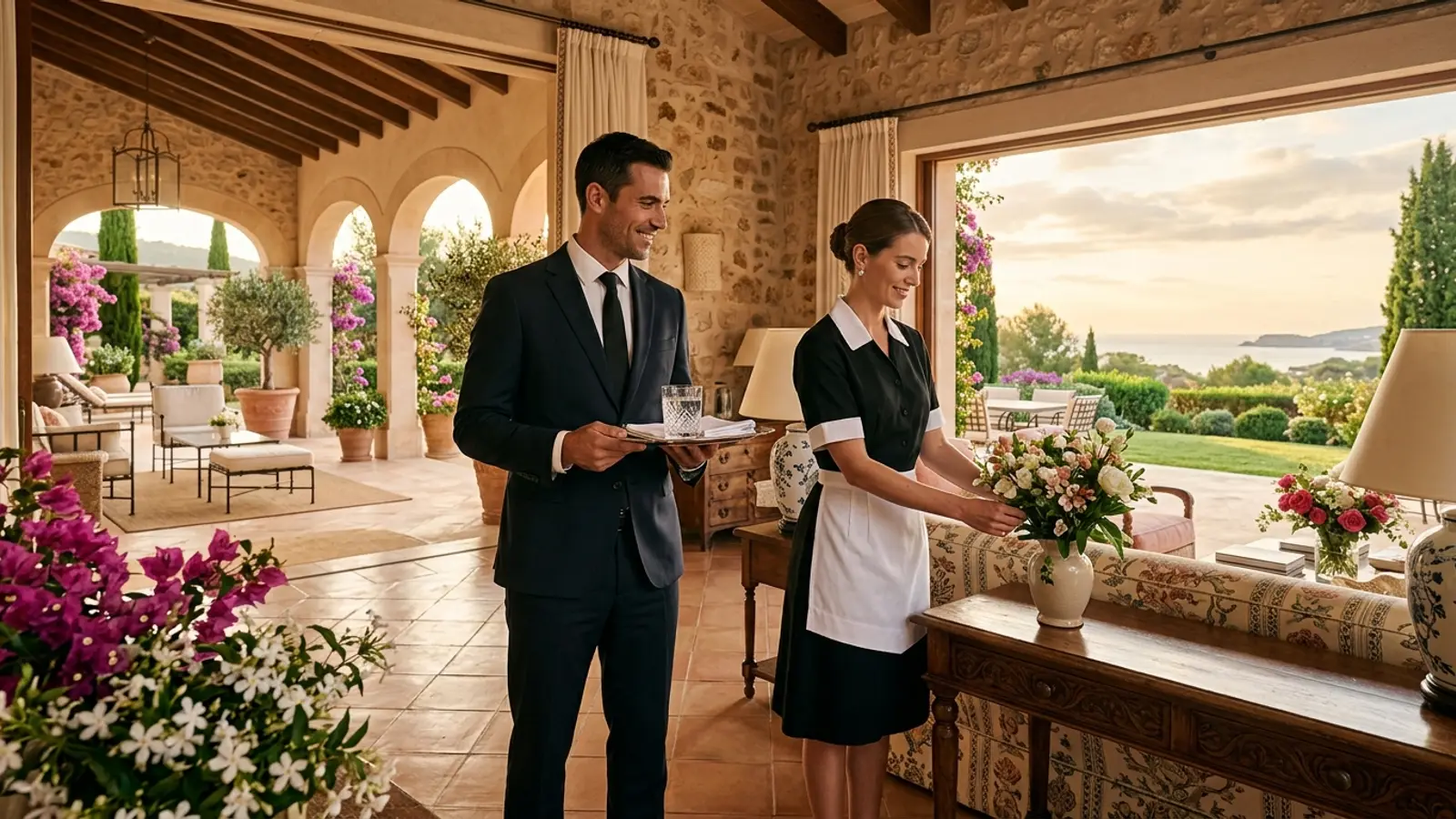
A live-in couple for a main residence is a couple who live at the property, usually throughout the week, and share responsibility for the daily running of the residence, within a division of duties agreed in advance.

Usually one partner leans towards indoor service and the other takes on outdoor and general support duties. What matters is that the two complement each other and are clear about their responsibilities.

At Maids & Co we assess the couple jointly: experience, references, stability, discretion, adaptability, organisation and the way they work together, as two professionals with two separate employment relationships. In a main home, living together carries particular weight: we look for couples who understand the rhythms of a family household and can sustain a stable, long-term working relationship.

Request a live-in couple
BY TYPE OF RESIDENCE

A live-in couple for each kind of home

What defines the position is not where the property is, but how the family uses it. The weight of each duty changes with the house and the family's lifestyle, and we assess whether the couple suit that type of property.

Large house or flat in the city

In large or multi-storey homes, indoor service usually carries more weight: running the house, laundry and ironing, daily cooking and looking after the family. The second partner may take on driving, shopping, errands and small maintenance tasks, and coordinates vehicles and suppliers. Flexibility, discretion and the ability to adapt to the family's schedule are especially important.


House outside the city

With a garden, pool, pets and more outdoor maintenance, the split between indoor and outdoor duties is more even. One partner is responsible for the running of the home; the other for the garden, pool, vehicles, small repairs, shopping and suppliers. Autonomy to resolve everyday issues before calling in outside services is particularly valued.

Country or mountain house, all year round

Autonomy matters even more. Besides the house, there may be land, tracks, firewood, a kitchen garden, animals or outdoor systems, with longer distances and fewer suppliers, so resourceful profiles are sought. This includes chalets in ski resorts across Europe, where the climate calls for prior experience. The couple must be comfortable in more isolated surroundings all year round.

Permanent home by the sea

It combines indoor service, outdoor maintenance and looking after guests, with busy seasons and long stays by family and friends. Terraces, gardens and pools need constant attention because of the climate and the sea. For international families, English or other languages may be a requirement, especially with foreign staff, suppliers or guests.

HOW THE COUPLE SPLIT THE WORK

The duties of a live-in couple

The split depends on each house, the family, whether there are other staff and each partner's experience. These are the areas we combine most often.

Interior and laundry

Daily and periodic cleaning, general organisation of the house, laundry and ironing for the whole family, seasonal changing of wardrobes, and care of clothes, fabrics, furniture and delicate surfaces.

Everyday cooking

The family's usual menus, children's meals, dinners and looking after guests, and organising the shopping and the larder. Where the home has a cook or chef, the couple coordinate with them and adapt their duties accordingly.

Support with the children

Help with children's routines: school runs and extracurricular activities, after-school snacks, keeping them company or getting ready for bed. It does not replace a nanny when the family needs a specialist in childcare.

Driving and errands

Driving family members to school, the airport or activities, maintenance and servicing of the vehicles, shopping, pharmacy, parcels and the other everyday errands of the household.

Garden, pool and grounds

Irrigation, lawn, basic pruning and upkeep of gardens, the pool, terraces and outdoor furniture. In homes with grounds it can take up much of one partner's day, especially in the main growing seasons.

Household maintenance

Basic maintenance of heating, air conditioning, plumbing, electrics, shutters and paintwork, and small repairs. When a job needs a specialist, the couple coordinate and supervise technicians and outside trades.

LIVE-IN COUPLE COSTS IN 2026

What a live-in couple is paid in 2026

Pay depends on the level of responsibility, the couple's experience and each partner's duties: size and complexity of the property, children, cooking, driving, outdoor work, languages, guests, other staff, the degree of autonomy expected of the couple, availability and location.

As a guide for Spain, the combined pay of a live-in couple usually falls between €3,000 and €6,000 gross a month.

Couple's salary (2 people)
€3,000 – €6,000/month
12 payments · duties, children, cooking, driving and languages
Legal minimum in cash
€2,849/month
2 × 2026 SMI over 12 payments (€1,424.50 each); over 14 payments, €1,221 a month each plus the two extra payments
Employer's Social Security
≈ 22% of each salary
two registrations under the household employees system
Accommodation and board
up to 30% in kind
never below the SMI in cash
Travelling with the family
effective work or standby
depending on the tasks (RD 1620/2011 art. 9) · days, accommodation and allowances agreed in writing before the trip
Maids & Co fee
1 month's salary + VAT
one-off, only on hiring · 6-month guarantee

In other European countries pay can be considerably higher and varies with the country, the local labour market, the cost of living and the specific conditions of the position. Accommodation provided by the family is not included in the €3,000 – €6,000 range.

HOW WE SELECT THE COUPLE

How we select a live-in couple

Two professionals who must fit individually and in the way they work together, with a single point of contact from start to finish.

  1. Property assessment

    We define the house or estate, each partner's duties and the main conditions of the position.

  2. Selection and shortlist of couples

    We assess couples with suitable experience, check their track record and present those that best fit the family.

  3. Interviews and assessment

    We arrange interviews with the shortlisted couples and support the family through the assessment and decision.

  4. Start and formalities

    We support the couple's start and the conditions of each position: each partner with their own contract and Social Security registration.

WHAT THEIR WEEK LOOKS LIKE

A live-in couple's week

A live-in couple work to a defined weekly structure built around the family's routines, so that each area has continuity without the service being reorganised constantly. For dinners, celebrations or weekends with guests, the organisation is adapted in advance and, when the volume calls for it, extra support staff are coordinated.

  • Cooking, shopping and the larder organised with continuity
  • Laundry and ironing built into the daily routine
  • Advance preparation for guests, dinners and celebrations
Family home with garden and pool looked after by a live-in couple
WHEN THE FAMILY GOES AWAY

When the family leaves the main residence

When the family is away, the live-in couple's work does not disappear; it changes in nature. These periods are used for deep cleaning, wardrobes, textiles, windows, preventive maintenance, small repairs, coordinating technicians and getting the house ready for the family's return.

In some positions, one or both partners go with the family on trips or stays at other residences. If this is part of the position, it should be set out in writing from the outset.

If the family has a second home used for part of the year, the profile calls for a different organisation.

Live-in couple for a second home
ACCOMMODATION, CAR AND TERMS

Conditions that support the couple's stability

In a live-in position, living and working conditions weigh on the couple's stability as much as the salary does.

  • Self-contained accommodation or staff quarters with privacy and rest
  • A property vehicle when there is driving, shopping or errands
  • Rest periods organised to fit the running of the residence
  • Defined availability for dinners, guests or out-of-hours needs
  • Clear responsibilities when there are other staff in the home
Two contracts, two registrations and accommodation in kind
WHERE WE RECRUIT THIS PROFILE

Live-in couples for all of Spain and Europe

We select live-in couples for main residences throughout Spain and in other European countries, adapting the selection to the location and the family. The process can run remotely, with video interviews and the in-person stages needed before the couple start.

Outside Spain, our work focuses on searching for, assessing and selecting the couple, checking references and supporting them until they start. We pay particular attention to the documents needed to work legally at the destination, languages, international experience and references from comparable properties. Terms and hiring follow the regulations of each country.

Household staff for Europe
FREQUENTLY ASKED QUESTIONS

Live-in couples: frequently asked questions

It is a couple who live at the property and share responsibility for the daily running of the family's main home, within a division of duties agreed in advance. What defines the position is not where the house is, but how the family uses it.

Usually one partner leans towards indoor service (cleaning, laundry and ironing, cooking and looking after the family) and the other towards outdoor and general support (maintenance, garden and pool, vehicles, shopping, errands and suppliers). The exact split depends on each house.

Yes. In some residences the couple take on a very broad share of the housework and maintenance; in others, they work alongside nannies, cooks, gardeners, chauffeurs or external staff, with clear duties and lines of responsibility.

House managers

As a guide for Spain, the combined pay of a live-in couple usually falls between €3,000 and €6,000 gross a month, depending on experience and the responsibilities of the position. Accommodation provided by the family comes on top of this guide.

Pay is often considerably higher than in Spain, and the figure varies with the country, the local labour market, the cost of living and the conditions of the position. Hiring follows the regulations in force in each country.

Household staff for Europe

Their work does not disappear; it changes in nature. These periods are used for deep cleaning, wardrobes, textiles, windows, preventive maintenance, small repairs and coordinating technicians, as well as getting the house ready for the family's return.

Yes, in some positions one or both partners go with the family on trips or stays at other residences. It should be set out in writing from the outset, because travel time counts as effective work or as standby.

Live-in couple for a second home

Self-contained accommodation or staff quarters with privacy, a property vehicle if there is driving or errands, well-organised rest periods, defined availability for dinners and guests, and clear responsibilities when there are other staff. They weigh on stability as much as the salary.

Live-in couples for the family's main residence

First vetted couples in under 3 hours. The fee is paid only on hiring.